# Πιστοποίηση ΟΗΕ για Συσκευασίες Επικίνδυνων Χημικών: Τι Πρέπει να Γνωρίζουν οι Αγοραστές When sourcing packaging for hazardous chemicals, UN certification isn't just a regulatory checkbox—it's a critical safeguard that protects your supply chain, ensures legal compliance, and minimizes liability. For procurement managers and packaging engineers selecting containers for dangerous goods, understanding UN certification requirements is essential. ## What Is UN Certification? UN certification refers to packaging that meets the United Nations Recommendations on the Transport of Dangerous Goods. These internationally recognized standards ensure that containers can safely transport hazardous materials by road, rail, sea, and air without leaking, breaking, or causing accidents. The UN classification system divides dangerous goods into nine classes based on their hazard type—from explosives and flammable liquids to corrosives and toxic substances. Packaging must be tested and certified according to the specific packing group (I, II, or III) that corresponds to the material's danger level. ## Why UN Certification Matters for Chemical Buyers ### Legal Compliance Across Borders Transporting hazardous chemicals without proper UN-certified packaging violates international transport regulations including ADR (Europe), IMDG (maritime), and IATA (air). Non-compliance can result in: - Substantial fines and penalties - Shipment rejection at borders or ports - Legal liability in case of spills or accidents - Damage to corporate reputation ### Supply Chain Safety UN-certified containers undergo rigorous testing including drop tests, stack tests, and leak-proofing trials. This certification ensures your chemicals reach their destination safely, protecting workers, transportation personnel, and the environment. ### Insurance and Liability Protection Most insurance policies require UN-certified packaging for hazardous materials. Using non-certified containers can void coverage and expose your company to significant financial risk if an incident occurs during transport. ## Understanding UN Markings Every UN-certified container carries specific markings that provide critical information. Here's how to read them: **Example marking: UN 1H1/Y1.4/150/20/TR/ALT-001** - **UN** = Meets UN standards - **1H1** = Packaging type (1 = drum, H = plastic, 1 = non-removable head) - **Y** = Packing group (X = I, Y = II, Z = III) - **1.4** = Specific gravity of liquid tested - **150** = Maximum gross weight in kg - **20** = Year of manufacture - **TR** = Country code where certified - **ALT-001** = Manufacturer's identification Understanding these markings helps you verify that the packaging matches your chemical's requirements and packing group classification. ## Key Testing Standards UN-certified packaging must pass several standardized tests: ### Drop Test Containers are filled and dropped from specified heights onto a rigid surface to simulate handling accidents. The height varies by packing group—higher drop requirements for more dangerous substances. ### Stack Test Packaging must withstand stacking pressure for extended periods, simulating warehouse storage and transport conditions. ### Leak-Proofness Test Containers undergo pressure testing to ensure closures remain sealed during temperature changes and transport vibrations. ### Hydraulic Pressure Test (for rigid containers) Applies internal pressure to verify structural integrity under stress. ## Choosing the Right UN-Certified Packaging ### Match Packing Group to Hazard Level - **Packing Group I (X)**: High danger substances requiring maximum protection - **Packing Group II (Y)**: Medium danger—most industrial chemicals - **Packing Group III (Z)**: Lower danger materials Your chemical's Safety Data Sheet (SDS) specifies the correct packing group. Never use packaging certified for a lower protection level than your chemical requires. ### Consider Chemical Compatibility UN certification tests structural integrity, but you must separately verify chemical compatibility. HDPE, for example, resists many acids and bases but may not be suitable for certain solvents. Always cross-reference your chemical with the container material's compatibility chart. ### Size and Configuration UN certification applies to specific container configurations. Common certified formats include: - Drums (20L to 220L) - Jerry cans (5L to 25L) - IBC containers (up to 1,000L) - Smaller bottles and canisters Ensure the exact size and closure type you need carries the appropriate certification. ## Working with Certified Suppliers ### Verify Certification Documentation Request copies of UN test certificates from your packaging supplier. These should include: - Test laboratory name and accreditation - Specific tests performed and results - Packaging specifications tested - Validity period and batch numbers ### Consistency in Manufacturing UN certification applies to packaging manufactured to exact specifications. Any design change—even minor modifications to wall thickness or closure type—requires recertification. Work with suppliers who maintain strict quality control to ensure every container matches certified specifications. ### Traceability Reliable suppliers provide full traceability, linking each container batch to specific test certificates. This documentation proves compliance during audits and in case of incidents. ## Common Compliance Mistakes to Avoid ### Using Expired Certifications UN certifications have limited validity periods. Verify that containers are manufactured and marked within the certification timeframe. ### Mixing Packing Groups Never assume a container certified for Packing Group III can safely transport Group II or I materials. Always use packaging certified for your chemical's specific classification. ### Ignoring Closure Requirements The closure (cap) is integral to UN certification. Replacing certified closures with non-certified alternatives invalidates the certification and creates serious safety risks. ### Overlooking Compatibility Testing UN certification doesn't guarantee chemical compatibility. Separately verify that your specific chemical won't degrade or react with the container material over your intended storage and transport duration. ## Regional Regulatory Considerations While UN standards are international, specific regions may have additional requirements: ### European Union (ADR) Requires UN certification plus compliance with EU-specific regulations for road transport of dangerous goods. ### United States (DOT) The Department of Transportation recognizes UN standards but may require additional testing or documentation for certain chemical classes. ### Middle East and Africa Varying levels of enforcement, but major ports and international logistics providers universally require UN certification for hazardous materials. ## Cost Considerations UN-certified packaging typically costs 15-30% more than non-certified alternatives. However, this cost is negligible compared to: - Potential fines (often €5,000-€50,000 per violation) - Shipment delays and rejections - Cleanup costs from spills or accidents - Liability exposure and insurance implications For any company regularly shipping hazardous chemicals, UN-certified packaging is a cost-effective risk management investment. ## Documentation and Record-Keeping Maintain comprehensive records of: - UN certification documents for all packaging types used - Chemical compatibility verification - Supplier quality certificates - Training records for staff handling dangerous goods packaging - Incident reports and corrective actions These records demonstrate due diligence during audits and provide legal protection in case of transport incidents. ## Future Trends in UN Certification ### Digitalization QR codes and RFID tags are increasingly used to link physical containers to digital certification records, streamlining verification and traceability. ### Sustainability Integration New testing protocols are being developed for recycled-content packaging, allowing environmentally conscious buyers to use sustainable materials without compromising UN compliance. ### Enhanced Testing for Emerging Chemicals As new chemical formulations enter the market, testing protocols continue evolving to address novel hazard profiles. ## Making the Right Sourcing Decision When evaluating UN-certified packaging suppliers, prioritize: 1. **Certification breadth**: Can they supply packaging for all your packing group requirements? 2. **Technical support**: Do they provide guidance on selecting appropriate packaging for specific chemicals? 3. **Quality consistency**: What quality control processes ensure every container meets certified specifications? 4. **Documentation**: How comprehensive and accessible is their certification documentation? 5. **Regulatory knowledge**: Can they advise on region-specific compliance requirements? ## Conclusion UN certification for hazardous chemical packaging is non-negotiable for companies committed to safety, compliance, and operational excellence. Understanding certification requirements, reading UN markings correctly, and working with reliable certified suppliers protects your business from regulatory penalties while ensuring chemicals reach their destination safely. The investment in properly certified packaging pays for itself many times over through risk mitigation, regulatory compliance, and supply chain reliability. For procurement managers sourcing chemical packaging, UN certification should be the foundation of any supplier evaluation—not an afterthought. --- **Need UN-certified packaging for your hazardous chemicals?** Alternaplast provides a comprehensive range of UN-certified HDPE containers including drums, jerry cans, and IBCs for Packing Groups I, II, and III. Our technical team can help you select the right certified packaging for your specific chemical transport requirements.
Όταν μια χημική ουσία ταξινομείται ως επικίνδυνο εμπόρευμα, το δοχείο στο οποίο μεταφέρεται δεν είναι απόφαση προμήθειας — είναι κανονιστική απαίτηση. Το λάθος δοχείο, όσο καλά κατασκευασμένο κι αν είναι, δεν είναι συμβατό δοχείο. Και ένα μη συμβατό δοχείο που μεταφέρει επικίνδυνη χημική ουσία αποτελεί ευθύνη σε κάθε σημείο της εφοδιαστικής αλυσίδας: στην αποθήκη φόρτωσης, στα σύνορα και σε περίπτωση συμβάντος.
Η πιστοποίηση ΟΗΕ είναι το διεθνές πρότυπο που ορίζει τι σημαίνει «συμβατό» για τη συσκευασία επικίνδυνων εμπορευμάτων. Η κατανόηση του τι καλύπτει η πιστοποίηση, πώς να διαβάσετε τις επισημάνσεις και τι να ρωτήσετε τον προμηθευτή σας είναι το σημείο εκκίνησης για να καθορίσετε σωστά την προδιαγραφή.
Τι σημαίνει πραγματικά η πιστοποίηση ΟΗΕ
Το πλαίσιο πιστοποίησης ΟΗΕ για τη συσκευασία καθορίζεται από τις Συστάσεις του ΟΗΕ για τη Μεταφορά Επικίνδυνων Εμπορευμάτων — γνωστές ως Orange Book. Αυτό το πλαίσιο υιοθετείται, με μικρές παραλλαγές, στους κύριους κανονισμούς μεταφοράς που διέπουν τη μεταφορά επικίνδυνων εμπορευμάτων οδικώς (ADR), θαλάσσια (IMDG), σιδηροδρομικώς (RID) και αεροπορικώς (IATA).
Ένα δοχείο Πιστοποιημένο ΟΗΕ έχει δοκιμαστεί σύμφωνα με ένα καθορισμένο σύνολο προτύπων απόδοσης από διαπιστευμένο φορέα δοκιμών. Οι δοκιμές ποικίλλουν ανάλογα με τον τύπο δοχείου, αλλά συνήθως περιλαμβάνουν:
Δοκιμή πτώσης — το δοχείο ρίχνεται από καθορισμένο ύψος σε σκληρή επιφάνεια σε πολλαπλούς προσανατολισμούς για να επαληθευτεί ότι δεν διαρρέει ή δεν ρήγνυται
Δοκιμή στοίβαξης — το δοχείο υποβάλλεται σε συμπιεστικό φορτίο ισοδύναμο με καθορισμένο ύψος στοίβαξης για καθορισμένη περίοδο για να επαληθευτεί ότι δεν παραμορφώνεται ή δεν αστοχεί
Δοκιμή υδραυλικής πίεσης — το δοχείο πιέζεται εσωτερικά για να επαληθευτεί ότι το σώμα και το κλείσιμο διατηρούν την ακεραιότητά τους υπό πίεση
Δοκιμή στεγανότητας — το δοχείο δοκιμάζεται για να επαληθευτεί ότι το σύστημα κλεισίματος δεν επιτρέπει στο υγρό να διαφύγει υπό καθορισμένες συνθήκες
Μόνο τα δοχεία που περνούν αυτές τις δοκιμές, κατασκευασμένα σύμφωνα με την ίδια προδιαγραφή, μπορούν να φέρουν την επισήμανση ΟΗΕ. Η πιστοποίηση ισχύει για το δοχείο ως σύστημα — σώμα και καπάκι μαζί — όχι μόνο για το σώμα.
Ανάγνωση της επισήμανσης ΟΗΕ
Κάθε δοχείο Πιστοποιημένο ΟΗΕ φέρει επισήμανση που κωδικοποιεί τις παραμέτρους πιστοποίησής του. Η κατανόηση αυτής της επισήμανσης επιτρέπει στους αγοραστές να επαληθεύσουν ότι ένα δοχείο είναι πιστοποιημένο για τη συγκεκριμένη εφαρμογή τους πριν από την αγορά.
Μια τυπική επισήμανση ΟΗΕ έχει ως εξής:
UN 3H1/Y1.5/100/25/TR/XXXX
Κάθε στοιχείο έχει συγκεκριμένη σημασία:
UN — επιβεβαιώνει ότι το δοχείο πληροί τα πρότυπα απόδοσης του ΟΗΕ
3H1 — κωδικός τύπου δοχείου. Ο αριθμός δείχνει την κατηγορία δοχείου (3 = δοχείο jerry, 4 = κιβώτιο, 6 = σύνθετο IBC, κ.λπ.), το γράμμα δείχνει το υλικό (H = HDPE, A = χάλυβας, G = ίνες), και το ψηφίο δείχνει τον συγκεκριμένο σχεδιασμό εντός της κατηγορίας
Y — συμβατότητα ομάδας συσκευασίας. X = κατάλληλο για Ομάδες Συσκευασίας I, II και III· Y = κατάλληλο για Ομάδες Συσκευασίας II και III· Z = κατάλληλο μόνο για Ομάδα Συσκευασίας III
1.5 — μέγιστη μικτή μάζα σε kg (για στερεά) ή ειδικό βάρος (για υγρά) για το οποίο είναι πιστοποιημένο το δοχείο
100 — πίεση υδραυλικής δοκιμής σε kPa (για υγρά)
25 — έτος κατασκευής (2025)
TR — κωδικός χώρας κατασκευής
XXXX — κωδικός ταυτοποίησης κατασκευαστή που έχει εκχωρηθεί από την αρμόδια αρχή
Για έναν αγοραστή, τα κρίσιμα στοιχεία είναι ο κωδικός τύπου δοχείου (επιβεβαιώνει το υλικό και τον σχεδιασμό), το γράμμα ομάδας συσκευασίας (επιβεβαιώνει την ταξινόμηση κινδύνου στην οποία εμπίπτει η χημική σας ουσία) και η βαθμολόγηση ειδικού βάρους ή μάζας (επιβεβαιώνει ότι το δοχείο είναι πιστοποιημένο για την πυκνότητα του προϊόντος σας).
Ομάδες συσκευασίας: ταίριασμα του δοχείου με τον κίνδυνο
Τα επικίνδυνα εμπορεύματα κατατάσσονται σε μία από τις τρεις ομάδες συσκευασίας με βάση τον βαθμό επικινδυνότητάς τους:
Ομάδα Συσκευασίας I (X) — υψηλός κίνδυνος. Ουσίες που παρουσιάζουν σοβαρό κίνδυνο. Παραδείγματα: ορισμένα εύφλεκτα υγρά με πολύ χαμηλό σημείο ανάφλεξης, ιδιαίτερα τοξικές ουσίες.
Ομάδα Συσκευασίας II (Y) — μέτριος κίνδυνος. Ουσίες που παρουσιάζουν μέτριο κίνδυνο. Παραδείγματα: πολλά κοινά βιομηχανικά χημικά, μέτρια τοξικές ουσίες, εύφλεκτα υγρά με σημεία ανάφλεξης σε μεσαίο εύρος.
Ομάδα Συσκευασίας III (Z) — χαμηλός κίνδυνος. Ουσίες που παρουσιάζουν μικρό κίνδυνο. Παραδείγματα: πολλά αραιωμένα διαλύματα, ήπια εύφλεκτα υγρά, ουσίες χαμηλής τοξικότητας.
Η ομάδα συσκευασίας του χημικού σας προσδιορίζεται από την ταξινόμησή του σύμφωνα με τους σχετικούς κανονισμούς επικίνδυνων εμπορευμάτων — όχι από τον αγοραστή, αλλά από τον κατασκευαστή ή τον εισαγωγέα του χημικού, τεκμηριωμένη στο δελτίο δεδομένων ασφαλείας (SDS) και στη δήλωση επικίνδυνων εμπορευμάτων.
Η σήμανση ΟΗΕ του δοχείου πρέπει να περιλαμβάνει προσδιορισμό ομάδας συσκευασίας που καλύπτει την ομάδα συσκευασίας του χημικού σας. Ένα δοχείο με σήμανση Y είναι πιστοποιημένο για τις Ομάδες Συσκευασίας II και III — δεν μπορεί να χρησιμοποιηθεί για ουσία Ομάδας Συσκευασίας I ανεξαρτήτως της φυσικής του απόδοσης.
Δοχεία IBC και πιστοποίηση ΟΗΕ
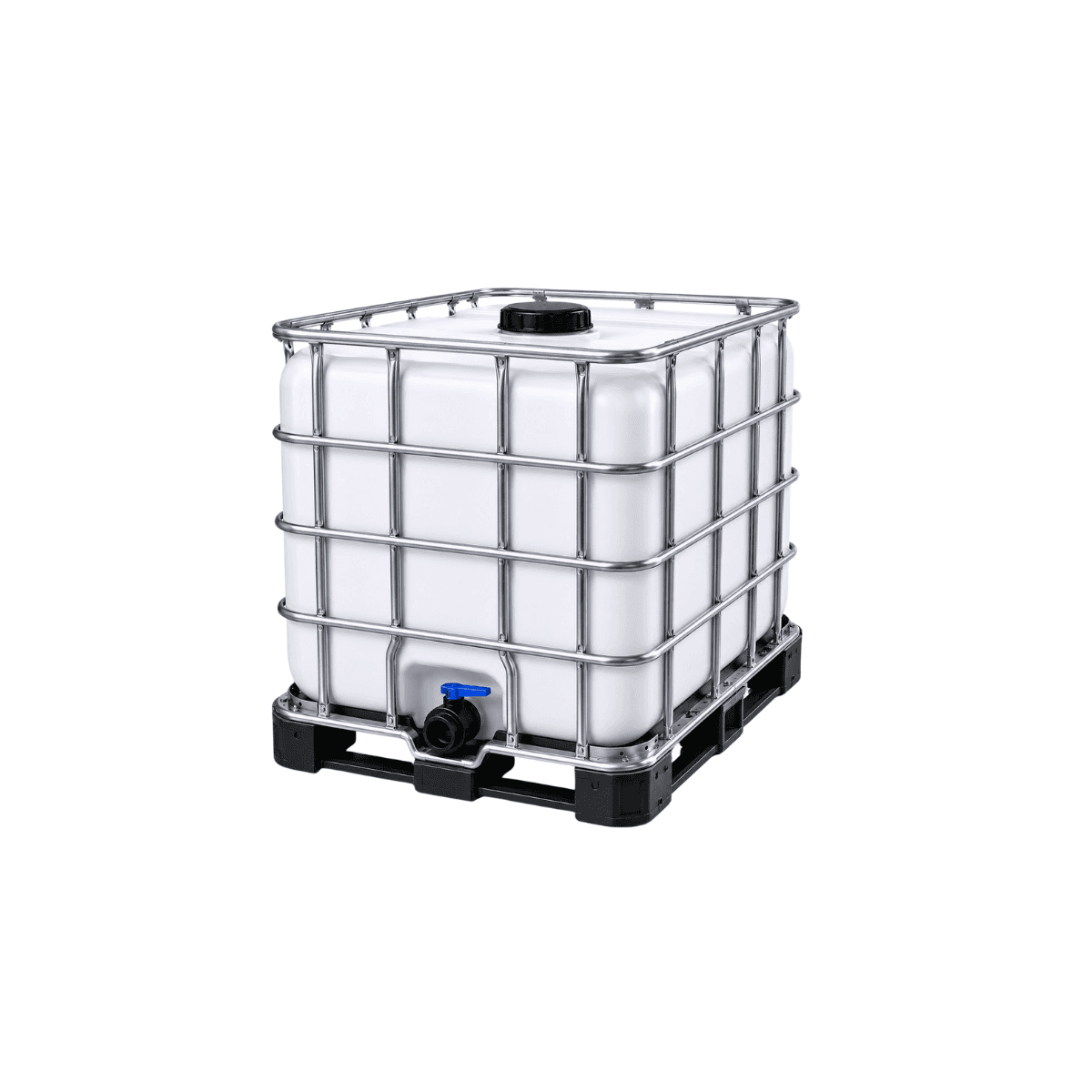
Τα Ενδιάμεσα Δοχεία Χύδην (IBC) αποτελούν το τυποποιημένο σχήμα για τη χύδην μεταφορά και αποθήκευση επικίνδυνων χημικών σε όγκους μεταξύ περίπου 400 και 3.000 λίτρων. Το πιο κοινό σχήμα για υγρά χημικά είναι το σύνθετο IBC — ένα εσωτερικό δοχείο HDPE εντός εξωτερικού κλωβού από ατσάλι ή αλουμίνιο, σε βάση παλέτας.
Η πιστοποίηση ΟΗΕ για IBC ακολουθεί το ίδιο πλαίσιο με τα μικρότερα δοχεία αλλά με πρωτόκολλα δοκιμών ειδικά για IBC. Ο κωδικός τύπου ΟΗΕ για σύνθετα IBC με εσωτερικά δοχεία HDPE ξεκινά με 31H — για παράδειγμα, το 31HA1 υποδηλώνει ένα σύνθετο IBC με εσωτερικό δοχείο HDPE και εξωτερικό πλαίσιο από ατσάλι.
Στην Alternaplast, προμηθεύουμε πιστοποιημένα ΟΗΕ σύνθετα IBC 1.000 λίτρων με μεταλλικές βάσεις παλέτας — το τυποποιημένο σχήμα για χύδην μεταφορά υγρών χημικών. Αυτά τα δοχεία φέρουν την πλήρη σήμανση ΟΗΕ που επιβεβαιώνει τις παραμέτρους πιστοποίησης, τη συμβατότητα ομάδας συσκευασίας και το έτος κατασκευής.
Βασικές προδιαγραφές για αγοραστές:
Όγκος: Ονομαστική χωρητικότητα 1.000 λίτρων
Εσωτερικό δοχείο: HDPE — συμβατό με το φάσμα βιομηχανικών χημικών που περιγράφονται στο προφίλ χημικής αντοχής του HDPE
Εξωτερικό πλαίσιο: Κλωβός από ατσάλι με μεταλλική βάση παλέτας
Πιστοποίηση ΟΗΕ: Επιβεβαιώνεται στο στάδιο παραγγελίας — η συμβατότητα ομάδας συσκευασίας και ειδικού βάρους επαληθεύεται έναντι του χημικού και της εφαρμογής σας
Καπάκι: Ανοίγματα κορυφής DN150 ή DN50 ανάλογα με τη διαμόρφωση· προδιαγραφή καπακιού συντονισμένη με τις απαιτήσεις πλήρωσης και εκκένωσης
Για αγοραστές που προσδιορίζουν πιστοποιημένη ΟΗΕ συσκευασία IBC για πρώτη φορά ή μεταβαίνουν από μη πιστοποιημένα σε πιστοποιημένα δοχεία, η ομάδα μας μπορεί να επιβεβαιώσει τις παραμέτρους πιστοποίησης και να παράσχει τεκμηρίωση για σκοπούς συμμόρφωσης επικίνδυνων εμπορευμάτων.
Βαρέλια και τύμπανα για πιστοποιημένη ΟΗΕ μεταφορά χημικών
Για όγκους μεταξύ περίπου 30 και 220 λίτρων, τα βαρέλια HDPE και τα βαρέλια από ατσάλι αποτελούν τα τυποποιημένα πιστοποιημένα ΟΗΕ σχήματα για υγρά επικίνδυνα χημικά.
Βαρέλια HDPE — κωδικός τύπου ΟΗΕ 1H1 (κλειστή κεφαλή) ή 1H2 (ανοιχτή κεφαλή) — είναι κατάλληλα για ευρύ φάσμα υγρών χημικών συμβατών με HDPE. Προσφέρουν τα πλεονεκτήματα χημικής αντοχής του HDPE σε ένα ανθεκτικό σχήμα πιστοποιημένο για μεταφορά επικίνδυνων εμπορευμάτων.
Μεταλλικά βαρέλια — κωδικός τύπου ΟΗΕ 1A1 (κλειστή κεφαλή) ή 1A2 (ανοιχτή κεφαλή) — απαιτούνται για χημικά μη συμβατά με HDPE, συμπεριλαμβανομένων αρωματικών και χλωριωμένων διαλυτών, καθώς και για ορισμένες ουσίες υψηλού κινδύνου Ομάδας Συσκευασίας I όπου ο χάλυβας παρέχει την απαιτούμενη δομική απόδοση και επίδοση περιορισμού.
Η επιλογή μεταξύ HDPE και μεταλλικών βαρελιών είναι κυρίως απόφαση χημικής συμβατότητας — η ίδια λογική επιλογής υλικού που ισχύει για μικρότερα δοχεία ισχύει και εδώ. Για χημικά συμβατά με HDPE, τα βαρέλια HDPE προτιμώνται συνήθως για το πλεονέκτημα βάρους τους (σημαντικά ελαφρύτερα από τον χάλυβα σε ισοδύναμο όγκο), την αντοχή στη διάβρωση και τη συμβατότητα με ευρύτερο φάσμα περιεχομένων χωρίς προβλήματα υπολειμμάτων.
Για συγκεκριμένη διαθεσιμότητα βαρελιών και παραμέτρους πιστοποίησης ΟΗΕ, επικοινωνήστε απευθείας με την ομάδα μας.
Τι να ρωτήσετε τον προμηθευτή σας
Κατά την αγορά πιστοποιημένων ΟΗΕ δοχείων για συσκευασία επικίνδυνων χημικών, οι ακόλουθες ερωτήσεις διασφαλίζουν ότι το δοχείο είναι πραγματικά κατάλληλο για την εφαρμογή σας:
1. Ποιος είναι ο κωδικός τύπου ΟΗΕ, η ομάδα συσκευασίας και η βαθμολογία ειδικού βάρους στη σήμανση; Επιβεβαιώστε ότι αυτά ταιριάζουν με την ταξινόμηση και την πυκνότητα του χημικού σας πριν δεσμευτείτε σε μια προδιαγραφή δοχείου.
2. Είναι η πιστοποίηση τρέχουσα; Οι πιστοποιήσεις ΟΗΕ εκδίδονται για συγκεκριμένες παρτίδες παραγωγής. Επιβεβαιώστε ότι τα δοχεία που παρέχονται κατασκευάζονται σύμφωνα με την πιστοποιημένη προδιαγραφή, όχι σε τροποποιημένη έκδοση.
3. Ποια τεκμηρίωση είναι διαθέσιμη; Για σκοπούς ελέγχου και συμμόρφωσης, ο προμηθευτής σας θα πρέπει να είναι σε θέση να παρέχει το πιστοποιητικό δοκιμής ή την τεκμηρίωση πιστοποίησης από τον διαπιστευμένο οργανισμό δοκιμών.
4. Καλύπτει η πιστοποίηση το πώμα καθώς και το σώμα; Η πιστοποίηση ΟΗΕ ισχύει για το δοχείο ως σύστημα. Επιβεβαιώστε ότι το πώμα που παρέχεται αποτελεί μέρος του πιστοποιημένου συστήματος — ένα διαφορετικό πώμα σε πιστοποιημένο σώμα δεν συνιστά πιστοποιημένο δοχείο.
5. Ποια είναι η πολιτική επαναχρησιμοποίησης; Τα πιστοποιημένα ΟΗΕ δοχεία για ορισμένα επικίνδυνα προϊόντα έχουν καθορισμένους περιορισμούς επαναχρησιμοποίησης. Ειδικά για τα IBC, μπορεί να ισχύουν απαιτήσεις επαναπιστοποίησης ή επιθεώρησης μετά από καθορισμένο αριθμό χρήσεων ή καθορισμένη περίοδο.
Σημείωση για μη πιστοποιημένα δοχεία για μη ρυθμιζόμενα χημικά
Δεν ταξινομούνται όλα τα βιομηχανικά χημικά ως επικίνδυνα προϊόντα σύμφωνα με τους κανονισμούς μεταφοράς. Πολλά κοινά χημικά διεργασιών, καθαριστικά και βιομηχανικά υγρά δεν πληρούν τα κριτήρια ταξινόμησης για επικίνδυνα προϊόντα και μπορούν να μεταφερθούν σε μη πιστοποιημένα δοχεία χωρίς κανονιστικό περιορισμό.
Εάν το χημικό σας δεν ταξινομείται ως επικίνδυνο προϊόν, η πιστοποίηση ΟΗΕ δεν είναι απαίτηση — αν και δοχεία υψηλότερων προδιαγραφών μπορεί να εξακολουθούν να είναι κατάλληλα για λόγους ασφάλειας και ακεραιότητας προϊόντος. Εάν δεν είστε βέβαιοι για την ταξινόμηση του χημικού σας, το σημείο εκκίνησης είναι το Δελτίο Δεδομένων Ασφαλείας ενότητα 14 (Πληροφορίες Μεταφοράς), το οποίο τεκμηριώνει την ταξινόμηση επικίνδυνων προϊόντων εφόσον ισχύει.
Ενημερωθείτε για τη διαθεσιμότητα πιστοποιημένων ΟΗΕ IBC και την τεκμηρίωση πιστοποίησης →
Χρειάζεστε λύσεις συσκευασίας;
Εξερευνήστε τη μεγάλη γκάμα υψηλής ποιότητας πλαστικών φιαλών, βάζων και καπακιών που είναι ιδανικά για τα προϊόντα σας.