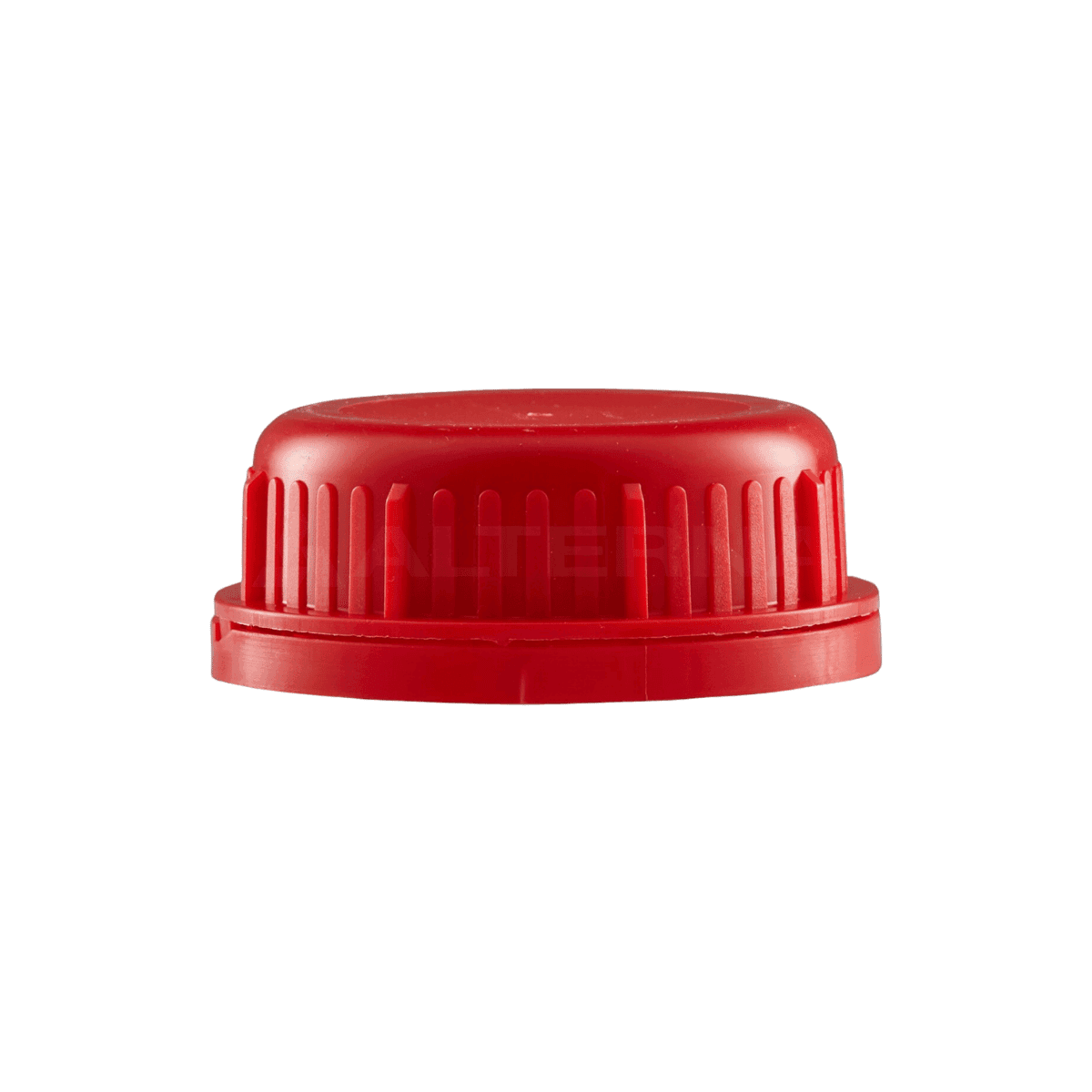
Combining Venting with Tamper-Evidence: What Agrochemical Brands Need to Know
When agrochemical packaging teams first encounter vented closures, a common concern surfaces quickly: if the cap allows gas to pass through a membrane, how can it also provide tamper-evidence? The two requirements seem to pull in opposite directions — one demands a controlled opening in the closure, the other demands an unbroken seal.
This concern is understandable but based on a misconception. Venting and tamper-evidence are not competing functions. They operate through entirely separate mechanisms, and modern agrochemical closures routinely deliver both simultaneously. Understanding how they work together — and what each element actually does — makes it possible to specify a closure that satisfies both requirements without compromise.
Two functions, two mechanisms
Tamper-evidence is a visible integrity feature. Its purpose is to provide unambiguous evidence that a container has been opened — or that someone has attempted to open it. In agrochemical closures, this is typically achieved through one of two mechanisms:
A breakable induction ring (also called a tamper-evident band) is a plastic ring attached to the base of the cap by a series of small bridges. When the cap is opened for the first time, the bridges break and the ring separates visibly from the cap body. The ring remains on the bottle neck as a permanent record of first opening. It cannot be reattached without obvious evidence of tampering.
An induction foil seal is an aluminium foil membrane heat-bonded to the bottle neck at the filling line. It provides a hermetic barrier that must be physically broken to access the product. Once broken, it cannot be restored. Some foil seals include printed indicators that change appearance when the seal integrity is compromised.
Venting is a functional performance feature. Its purpose is to manage internal pressure by allowing gas to pass through a microporous PTFE membrane while preventing liquid from doing the same. It operates continuously and passively throughout the container's service life.
These two features address entirely different aspects of the container's function. Tamper-evidence answers the question: has this container been opened? Venting answers the question: is the pressure inside this container being managed? There is no functional overlap, and there is no design conflict.
How induction sealing and venting work together
The most common configuration for premium agrochemical packaging combines three elements: a vented cap, a tamper-evident band, and an aluminium foil induction seal.
Each element serves a distinct role across the container's lifecycle:
At the filling line, the induction foil seal is applied to the bottle neck before capping. This creates a hermetic barrier between the product and the vent membrane — the product is fully sealed against moisture ingress, oxidation, and contamination during initial storage and transit. The vent membrane, located in the cap body above the foil, is not yet in contact with the product or its vapour.
During storage and transport before first use, the foil seal maintains primary product integrity. The tamper-evident band remains intact, confirming the container has not been opened. The vent membrane is present but inactive — there is no vapour pathway from the product through the intact foil.
At first opening, the user removes the cap. The tamper-evident band breaks and remains on the bottle neck, providing visible confirmation of first opening. The foil seal is punctured or peeled to access the product. From this point, the foil is no longer a barrier.
During in-use storage — when the container has been partially used and is being stored between applications — the vent membrane becomes active. The product is now in direct contact with the headspace, and off-gassing can occur. The vented cap manages this pressure continuously, preventing the buildup that causes seal stress, container deformation, and difficult reopening.
This lifecycle structure is why the combination of all three elements is the correct specification for agrochemical products with off-gassing potential: the foil handles primary protection, the tamper-evident band handles chain-of-custody integrity, and the vent handles in-use pressure management.
Why tamper-evidence matters specifically in agrochemicals
Tamper-evidence is not a generic packaging nicety — in agrochemicals, it carries specific regulatory and commercial weight.
Product registration requirements. In many markets, the packaging specification for a registered agrochemical product must meet defined closure integrity standards. Tamper-evident closures are required or strongly recommended under pesticide registration frameworks in the EU, UK, and numerous export markets. A product registered with a tamper-evident closure cannot be relabelled or repackaged into non-tamper-evident containers without regulatory implications.
Supply chain integrity. Agrochemical supply chains — particularly for high-value insecticides, fungicides, and herbicides — are targets for counterfeiting and adulteration. A tamper-evident closure that has been compromised is visible to every party in the chain: the distributor receiving the pallet, the retailer stocking the shelf, and the farmer opening the container in the field. The breakable band or intact foil is the first line of evidence that the product is genuine and unmodified.
Operator safety. For concentrated pesticide and herbicide formulations, the tamper-evident feature also serves a safety function: it provides the user with confirmation that the container has not been previously opened and that the concentration and composition of the product are as labelled. This is particularly relevant where containers pass through multiple hands before reaching the end user.
Vented closures with tamper-evidence: what to look for in a specification
When specifying a vented closure with tamper-evidence for agrochemical use, the following elements define the requirement:
Tamper-evident mechanism. For most agrochemical applications, a breakable induction ring on the cap body is the standard approach. It is visible, unambiguous, and does not require the user to inspect a foil or internal seal to confirm integrity. Where foil induction sealing is also specified, the two elements are complementary rather than redundant.
Foil liner compatibility. If induction sealing is required, confirm that the vented cap is compatible with the foil liner format used on your filling line. The foil is applied to the bottle neck, not the cap — but cap geometry affects how the foil seats and seals. This should be confirmed with your container and closure supplier before finalising the filling line setup.
Cap material and chemical compatibility. Both the cap body and the tamper-evident band must be chemically compatible with the formulation. For solvent-based agrochemicals, this typically means polypropylene (PP) cap bodies, which offer better solvent resistance than polyethylene. The PTFE vent membrane is compatible with virtually all agrochemical solvents.
Closure torque specification. The application torque for a vented tamper-evident cap must be sufficient to maintain the foil seal during storage and transport but not so high that it creates removal difficulty for the end user. This is a filling line parameter, not a cap parameter — but it should be validated during line setup with the actual cap and bottle combination, not assumed from generic torque tables.
A note on child-resistant vented closures
Some agrochemical markets require or recommend child-resistant (CR) closures for certain product categories — particularly concentrated formulations sold in consumer-accessible retail channels. Child-resistant mechanisms typically require a specific push-and-turn or squeeze-and-turn action to open the cap.
Vented closures with child-resistant mechanisms are available, though they represent a more specialised specification than standard vented tamper-evident caps. If child-resistance is a requirement for your target market, this should be identified at the container specification stage — CR mechanisms affect cap geometry, application torque, and opening ergonomics, and are not easily retrofitted to a standard closure design.
Summary: what a complete agrochemical closure specification looks like
For an agrochemical product with off-gassing potential, distributed through professional channels, the complete closure specification typically includes:
Vented cap with PTFE microporous membrane — continuous pressure management during in-use storage
Breakable tamper-evident band — visible first-opening evidence for supply chain and regulatory compliance
Aluminium foil induction seal — hermetic primary protection from filling through first opening
PP cap body — chemical compatibility with solvent-based formulations
These four elements address pressure management, tamper-evidence, primary product protection, and chemical compatibility in a single closure system. Each element is independently specified and serves a distinct function. None of them conflict.
At Alternaplast, our vented bottle closures are available with tamper-evident bands and aluminium foil-lined options across our vented bottle range. For jerry cans and larger containers, vented tamper-evident closures are available on request.
Need Packaging Solutions?
Explore our wide range of high-quality plastic bottles, jars, and caps perfect for your products.