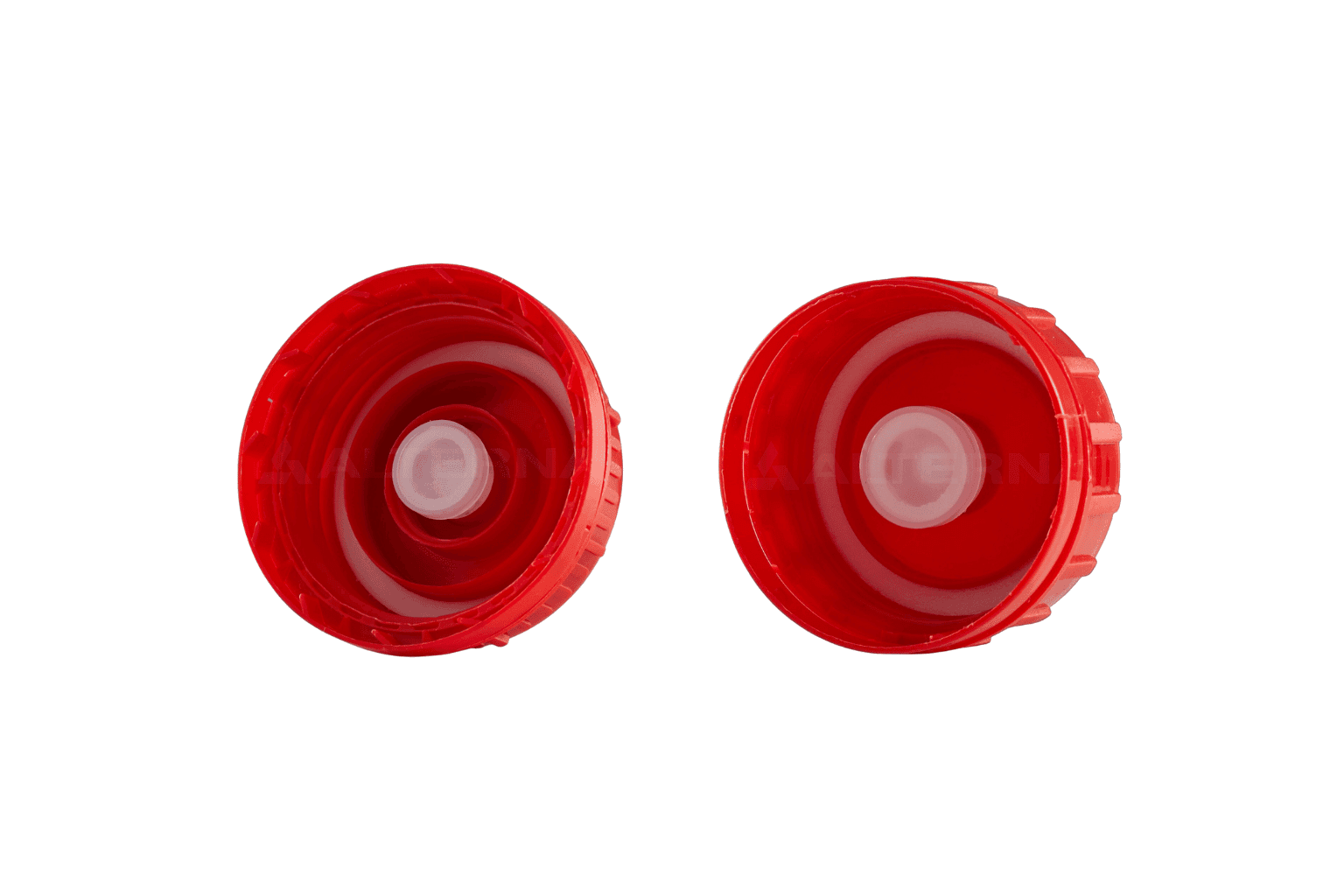
How to Specify a Vented Closure: Flow Rate, Venting Pressure, and Membrane Selection
Most packaging specification conversations for agrochemical containers start and end with three parameters: volume, cap diameter, and closure type. For standard screw caps, that is usually sufficient. For vented closures, it is not.
A vented closure is not a single product — it is a category of closure with meaningful variation in performance characteristics. Two vented caps of the same diameter can behave very differently under the same formulation and storage conditions, depending on how the membrane is specified. Selecting the wrong variant may result in insufficient pressure relief, product leakage, or premature membrane failure.
This article covers the parameters that define vented closure performance — venting pressure threshold, flow rate, and membrane material — and explains how to translate your formulation and application requirements into a closure specification.
The three parameters that define a vented closure
1. Venting pressure threshold
Every vented closure has a venting pressure threshold — the minimum internal pressure differential required to initiate gas flow through the membrane. Below this threshold, the membrane behaves as a sealed barrier. Above it, gas passes through.
This threshold is set by the membrane's pore size and structure, and it matters for two reasons.
Too high a threshold means the closure does not vent until significant pressure has already accumulated. For formulations with slow, sustained off-gassing, a high-threshold membrane may allow pressure to build to levels that stress the container or seal before equalisation begins. The vent is technically present but functionally delayed.
Too low a threshold means the closure vents under minimal pressure differential — including the small differentials created by normal temperature fluctuation, altitude change during transport, or filling line conditions. For formulations where moisture ingress is a concern, an overly sensitive vent may allow humid air to enter the container during pressure cycling, affecting product stability.
For most agrochemical applications, the appropriate venting pressure threshold is low enough to prevent meaningful pressure accumulation but high enough to exclude normal environmental variation. The right threshold varies by formulation and distribution profile — and is one of the parameters to confirm with your closure supplier at the specification stage.
The right threshold for a specific application depends on the formulation's off-gassing rate and the expected pressure differential from temperature cycling in the distribution chain.
2. Volumetric flow rate
Flow rate describes how much gas the membrane can pass per unit of time at a given pressure differential. It is typically expressed in ml/min or cm³/min at a defined test pressure.
Flow rate matters because off-gassing is not instantaneous — formulations release vapour continuously over time, and the vent membrane must be able to pass gas at least as fast as the formulation generates it. If the off-gassing rate exceeds the membrane's flow rate capacity, pressure accumulates despite the presence of a vent.
The flow rate requirement is determined by:
The formulation's off-gassing rate — measured or estimated from vapour pressure data at peak storage temperature
Container headspace volume — larger containers require higher absolute flow rates to maintain pressure equilibrium
Temperature cycling frequency and range — rapid temperature changes generate larger and more frequent pressure pulses, requiring a membrane capable of higher instantaneous flow
The flow rate requirement depends on the formulation's off-gassing rate, container headspace volume, and the temperature cycling profile of the distribution chain. For high-volatility formulations or large-format containers, higher flow rates are required — and this should be confirmed with your closure supplier against your specific formulation data rather than assumed from generic specifications.
In practice, flow rate is set by membrane area and pore structure. A larger cap diameter accommodates a larger membrane and therefore a higher flow rate — which is one reason cap diameter selection and vent performance specification should be considered together rather than independently.
3. Membrane material
The membrane is the functional core of a vented closure. The most common material used in agrochemical closures is PTFE (polytetrafluoroethylene), selected for three properties:
Broad chemical resistance — PTFE is resistant to virtually all agrochemical solvents, including aromatic hydrocarbons (xylene, toluene), aliphatic hydrocarbons (naphtha, mineral spirits), and most polar solvents. It does not swell, degrade, or lose pore structure on contact with these materials under normal storage conditions.
Hydrophobic surface energy — PTFE has extremely low surface energy, meaning liquids do not wet the membrane surface. This is the physical basis for liquid-impermeability: the surface tension of the liquid prevents it from penetrating the pores even when the container is inverted or subjected to handling pressure. The liquid barrier holds even as gas passes freely.
Temperature stability — PTFE maintains its mechanical properties across a wide temperature range, from below freezing to above 200°C. The membrane does not soften or deform under the temperature conditions encountered in agrochemical storage and transport, including high-temperature warehouse environments.
Alternative membrane materials include expanded PTFE (ePTFE), which offers higher porosity and flow rate at the same diameter, and PE-based membranes, which are lower cost but offer narrower chemical resistance. For agrochemical applications involving solvent-based formulations, standard or expanded PTFE is the correct specification in most cases. PE-based membranes may be appropriate for water-based formulations where solvent exposure is not a factor.
How formulation type maps to closure specification
Different agrochemical formulation types have different pressure profiles, and the closure specification should reflect this.
Emulsifiable concentrates (ECs) — high solvent content, significant vapour pressure, strong off-gassing in warm conditions. Require low venting pressure threshold and moderate-to-high flow rate. PTFE membrane essential due to aromatic solvent content.
Suspension concentrates (SCs) — water-based continuous phase with solid active ingredient particles. Lower vapour pressure than ECs. Venting may still be required for formulations with surfactants or co-solvents that contribute vapour pressure. PTFE or PE membrane depending on co-solvent profile.
Soluble liquid concentrates (SLs) — water-based but often contain glycols or other co-solvents. Moderate vapour pressure. Closure specification depends on co-solvent identity and concentration.
Biological and microbial formulations — off-gassing from metabolic CO₂ production rather than solvent evaporation. Flow rate requirement depends on biological activity level. PTFE membrane recommended for compatibility with fermentation media and adjuvants.
Liquid fertilizer concentrates — variable vapour pressure depending on formulation base. High-nitrogen solutions may off-gas ammonia under certain conditions. PTFE membrane required where ammonia exposure is possible.
The specification checklist
When specifying a vented closure for an agrochemical application, the following information defines the requirement:
From the formulation:
Vapour pressure at peak storage temperature (from SDS or lab measurement)
Solvent identity and concentration (determines membrane material requirement)
Off-gassing mechanism — solvent evaporation, biological activity, or reactive chemistry
pH and any reactive components that may affect membrane or cap materials
From the container:
Cap diameter and neck finish
Container headspace volume at target fill level
Fill temperature (if hot-fill process is used)
From the distribution chain:
Peak ambient temperature in storage and transport
Altitude range (significant altitude changes create pressure differentials that the vent must manage)
Expected shelf life and storage duration
From regulatory requirements:
Tamper-evidence requirements for product registration
Any child-resistance requirements applicable to the market
Induction seal requirements for primary product protection
Working with your supplier
A vented closure specification is not a standard catalogue selection in most cases — it is a coordination exercise between the container specification and the closure performance requirements. The right approach is to provide your supplier with the formulation parameters and distribution chain profile outlined above, and request confirmation that the proposed closure meets the flow rate and threshold requirements for your application.
At Alternaplast, vented closures for agrochemical jerry cans and bottles are specified on request. Our team coordinates closure selection with container format, cap diameter, and membrane specification based on your formulation type and application requirements.
Need Packaging Solutions?
Explore our wide range of high-quality plastic bottles, jars, and caps perfect for your products.