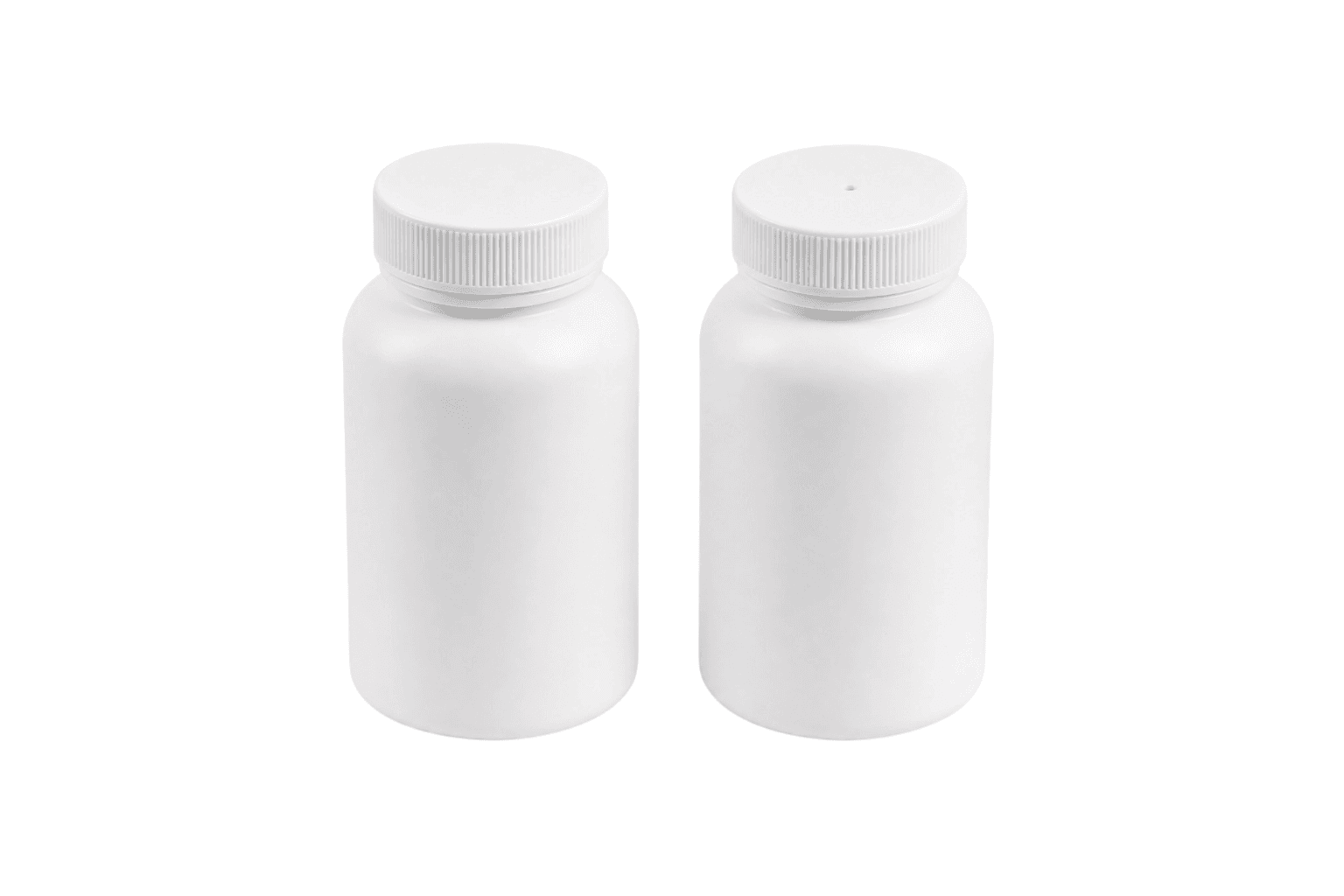
Vented vs. Non-Vented Caps: When Does Your Agrochemical Container Need a Vent?
It starts with something small: a bottle that's harder to open than it should be. Or a jerry can that arrives at the distributor slightly bloated. Or — worst case — a shipment where internal pressure has forced product past the seal, and a pallet of pesticide concentrate is leaking in a warehouse.
The root cause, in many of these situations, is deceptively simple: the wrong closure for the formulation. Specifically, using a standard sealed cap on a product that generates gas.
For agrochemical manufacturers and formulators, selecting between vented and non-vented closures is not a minor packaging detail. It directly affects product integrity, shelf stability, handling safety, and regulatory compliance. This article walks through the decision clearly — so your team can get it right at the specification stage, not after a field complaint.
What a vented cap actually does
A vented closure contains a small, controlled pathway that allows gas to escape from the container while preventing liquid from leaking out. In most designs used for agrochemicals, this is achieved through a microporous membrane — typically PTFE or PE-based — that is gas-permeable but liquid-impermeable.
The result: pressure that builds up inside the container has somewhere to go. The container stays dimensionally stable, the seal remains intact, and the product arrives at the point of use exactly as it left the filling line.
This is distinct from a standard screw cap, which creates a fully sealed environment. In the right application, that seal is exactly what you want. In the wrong one, it traps gas and creates a pressure vessel where you intended a packaging solution.
Why do some formulations generate gas in the first place?
Some agrochemical formulations release vapour or gas during storage — a phenomenon called off-gassing. The mechanisms vary by chemistry, but the most common causes are:
Volatile active ingredients with measurable vapour pressure at ambient or warehouse temperatures
Solvent-based formulations where carrier solvents slowly volatilise over time
Emulsifiable concentrates (ECs) with aromatic or petroleum-derived solvents
Biological or fermentation-based products that can generate CO₂
Temperature cycling in storage or transport, which accelerates vapour generation
The intensity of off-gassing depends on the specific formulation, concentration, ambient temperature range, and container fill level. A product stored at 15°C in a climate-controlled warehouse behaves very differently from the same product transported by road in summer at 40°C.
Five indicators that your product needs a vented closure
1. Your formulation contains volatile solvents Emulsifiable concentrates, solvent-based suspensions, and any formulation with a petroleum-derived carrier are the most common candidates. If your safety data sheet lists a vapour pressure above 0.1 kPa at 20°C for any component, pressure management should be part of your packaging specification.
2. You've experienced container deformation or bulging in field reports If distributors or end users have reported that containers are difficult to open, are swollen, or show signs of seal stress — the formulation is generating more pressure than the container can passively manage. Switching to a vented closure often resolves this without any change to the formulation itself.
3. Your product is stored or transported in warm climates Vapour pressure increases significantly with temperature. A formulation that causes no pressure issues at 20°C can produce meaningful gas buildup at 35–40°C. If your distribution chain includes warm regions, your container specification should account for the temperature extremes, not just ambient conditions.
4. You're packaging in larger volumes (1 L and above) Headspace volume matters. A larger container means more air above the product, more room for vapour to accumulate, and more pressure differential across the seal. Products that perform acceptably in 100 ml or 250 ml containers sometimes cause problems at 1 L or 5 L due to this headspace effect.
5. Regulatory or SDS guidance flags the formulation as pressure-sensitive Some pesticide and herbicide active ingredients are specifically noted in safety documentation as requiring pressure-relieving packaging. Always cross-reference your SDS and any applicable product registration requirements with your closure specification.
When a standard sealed cap is the right choice
Vented closures are not universally superior — they are situation-specific. A non-vented cap is the correct specification when:
The formulation has negligible vapour pressure and does not off-gas under expected storage conditions
The product requires a hermetic seal to prevent oxidation or moisture ingress (some water-dispersible granule liquids, for example)
The formulation is water-based with no volatile solvents and no biological activity
Container sizes are small (50–250 ml) and fill levels are high, leaving minimal headspace
In these cases, an unnecessary vent is a liability: it introduces a potential leak point and may allow moisture or contaminants to enter the container. The right closure is always the one matched to the formulation — not the most technically advanced option available.
Vented closures and tamper-evidence: not mutually exclusive
A common misconception is that venting and tamper-evidence are competing requirements — that you must choose one or the other. This is not the case.
Modern vented closures for agrochemicals are available with integrated tamper-evident features, typically a breakable ring or induction seal indicator. The vent membrane handles pressure management; the tamper-evident element handles chain-of-custody integrity. Both functions operate independently.
At Alternaplast, our vented HDPE bottles are available with both vented tamper-evident caps and vented aluminium foil-lined caps across a range of sizes from 50 ml to 1 L and beyond — including round, square, oval, and rectangular body formats. For larger volumes such as 5 L, 10 L, and 20 L jerry cans, vented closures are available on request.
Key takeaways
Does your product need a vented cap?
✓ Formulation contains volatile solvents or active ingredients with measurable vapour pressure
✓ Container volume is 1 L or above
✓ Product will be stored or transported in warm climates (>30°C)
✓ You have existing field reports of container deformation or seal stress
✓ Your SDS flags pressure as a storage concern
Likely does not need venting:
✗ Water-based, low-volatility formulation
✗ Product requires hermetic seal against moisture or oxygen
✗ Small container volume with high fill level
Get the right specification from the start
Choosing the wrong closure type is a surprisingly common and preventable source of product complaints in agrochemical supply chains. The specification decision is straightforward once you know your formulation's behaviour — but it requires asking the right questions early, not after packaging has been finalised.
If you're specifying packaging for a new agrochemical product or reviewing an existing line, our team can advise on closure selection based on formulation type, volume, and distribution requirements.
Need Packaging Solutions?
Explore our wide range of high-quality plastic bottles, jars, and caps perfect for your products.